
Things to do in Llanes when it rains: 12 ideas for making the most of the storm
Let me guess. You’ve been looking forward to your holiday in Llanes for months. You’ve been dreaming of white sandy beaches, sunny strolls through the old town and a couple of beers with views of the Bay of Biscay. And then you check the forecast and see that unmistakable icon: a rain cloud. Every day. For the whole week.
Breathe.
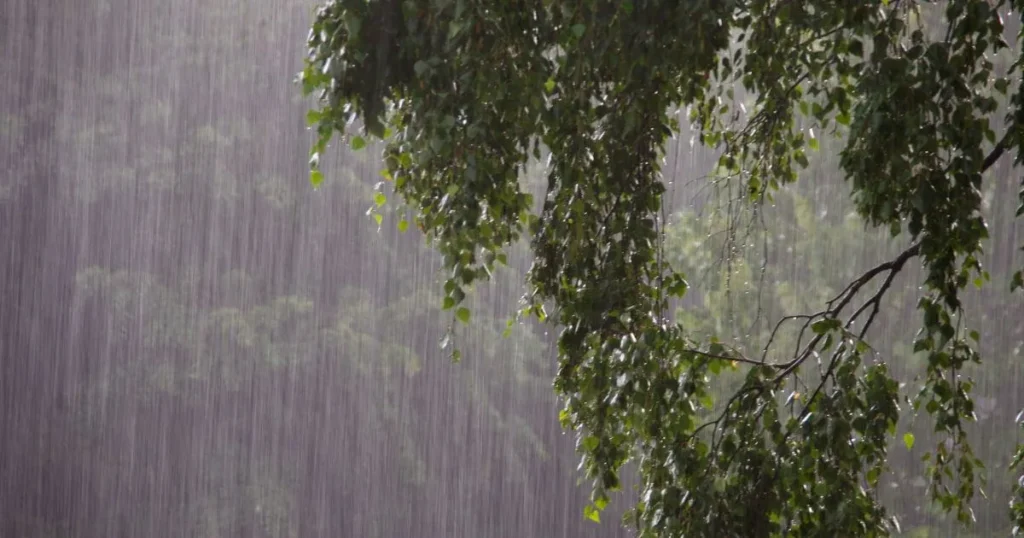
Because what no one tells you is that Llanes has a completely different personality in the rain, and in many ways, a more interesting one. The cobbled streets shine in a different way. The sea becomes the main attraction. And the plans that take a backseat in August suddenly come to life.
This guide exists because the first articles that appear on Google when you search "what to do in Llanes when it rains" talk about generic spas, the municipal sports center, and "exploring the town." Good news: there's so much more. And some of the best experiences in the area are literally better in a storm.
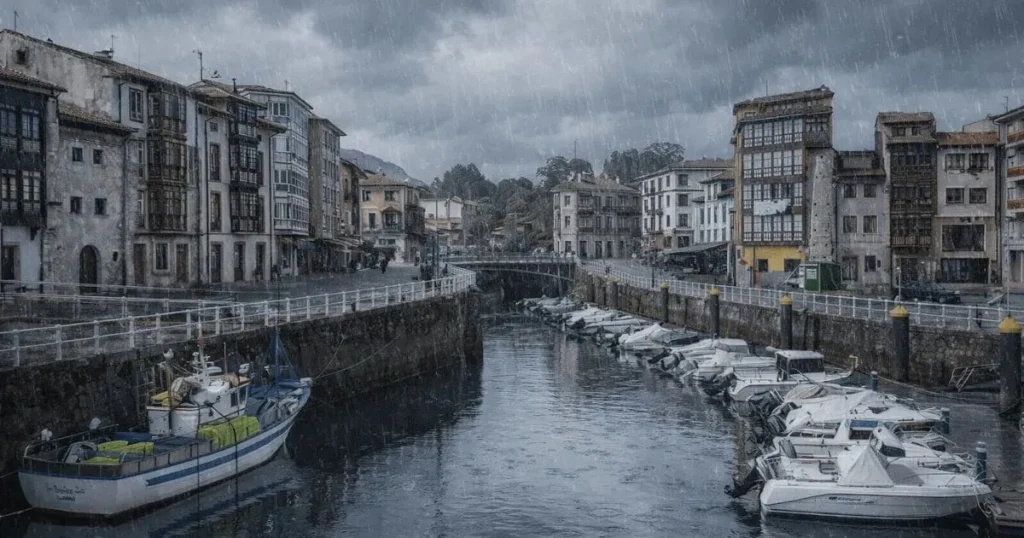
Why Llanes is different when it rains (and this isn't just for show)
Before getting into specific plans, there's something that deserves a moment of honesty: Asturias is green because it rains. And Llanes is no exception. If you come to the north expecting a Mediterranean climate, the problem isn't the weather, it's your expectations.
That said, there is a phenomenon that no traveler who only comes in August will ever see in its full magnitude: The Buffoons of Pria with a swell. When high tide coincides with a northwest storm, the natural geysers of the Pría cliffs shoot up columns of water ten to fifteen meters high. The ground trembles. The roar of the sea fills your chest. It is, without exaggeration, one of the most impressive natural spectacles on the Cantabrian coast.
And it only happens like this when the weather is "bad".
With that in mind, let's get down to business.
The 12 best plans for a rainy day in Llanes
1. The Jesters of Pria: the plan that improves with a storm
If there's one thing that distinguishes someone who truly knows Llanes, it's this: knowing that the Bufones (blowholes) must be seen during a storm. When the sea is calm, the phenomenon exists but is subtle. When the swell arrives, the natural geysers that form among the cracks in the cliffs become something that few words can adequately describe.
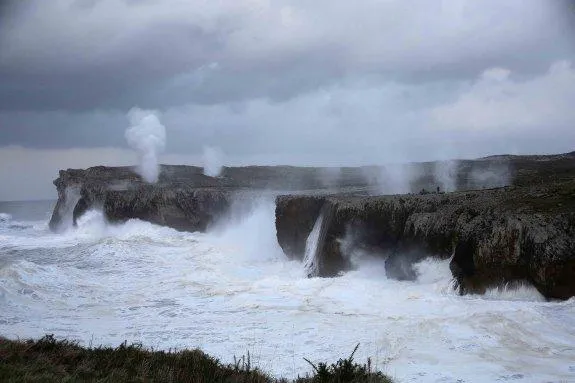
Access is easy from the AS-263 road (there's a parking area next to the viewpoint), and the walk to the edge of the cliffs is just a ten-minute stroll. Wear shoes with non-slip soles, a raincoat that can withstand some wind, and leave your umbrella in the car because the wind will blow it away.
Local Council: The best combination is high tide + northwest wind + moderate rain. Avoid going near the edge during severe weather: spray and gusts can catch you off guard.
If you want to experience this show from the front row, the rural apartments in Llanes The Bufones de Pría are literally right in front of the geysers. You wake up, open the window, and there they are.
2. The Pindal Cave: 18,000 years of history under the rock
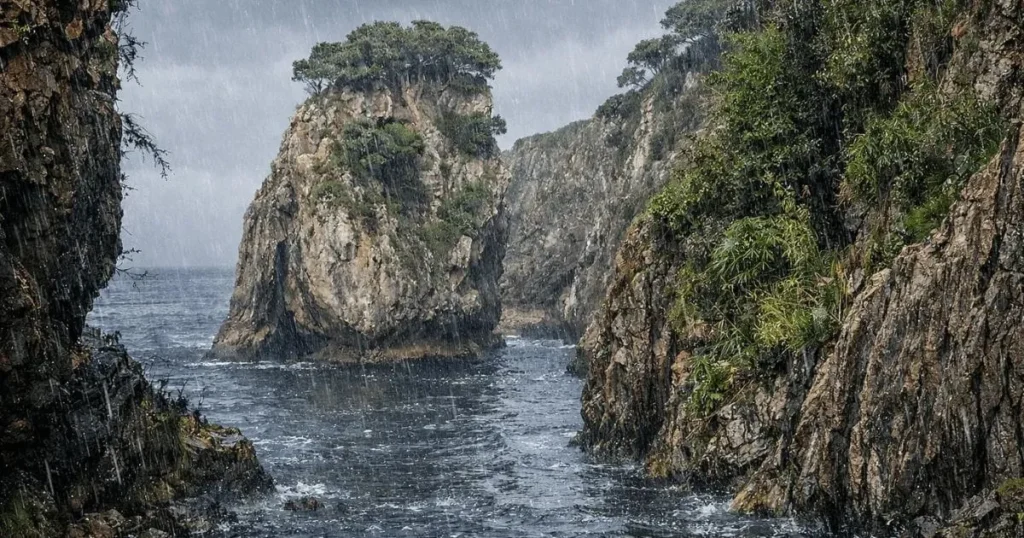
25 kilometers from Llanes, in the easternmost part of Asturias, there is a cave that deserves an entire article all to itself. Pindal Cave (Pimiango, Ribadedeva) holds cave paintings dating back between 13,000 and 18,000 years: bison, deer, horses and the most beloved figure of the place, a mammoth with a heart-shaped mark on its chest that the locals call "the mammoth in love".
It's a UNESCO World Heritage Site. The guided tour lasts approximately one hour, and access is through a beech forest overlooking the cliff, which alone makes the trip worthwhile.
Practical information:
- Schedule: Wednesday to Sunday, from 10:00 to 17:00. Closed Monday and Tuesday.
- Entrance: €3.13 (adults) / €1.62 (children aged 7 to 12, seniors over 65, large families). Free admission on Wednesdays.
- Advance booking required by phone: 608 175 284 (open Wednesday to Sunday, from 3:00 PM to 5:00 PM)
- Access for children: Ages 7 and up.
- From the A-8: Exit 277, direction El Peral (N-634). In El Peral, take the RD-1 towards Pimiango.
A note for those with time: next to the cave is the San Emeterio Interpretation Centre, There's a free entrance where you can understand the historical context of the site before entering. It's highly recommended to do this first.
3. The Tito Bustillo Cave: World Heritage Site half an hour away
If Pindal is intimate and mysterious, the Tito Bustillo Cave In Ribadesella (about 30 minutes from Llanes) it's on another level entirely. Discovered in 1968 by a group of speleologists, its 700-meter-long gallery houses more than one hundred Paleolithic art pieces dating from between 10,000 and 25,000 years ago. It is also a World Heritage Site.
The tours are exclusively guided and limited to 15 people per tour, so in high season you have to book well in advance.
Practical information:
- 2026 Season: See website (in 2025 it was open from March 5 to October 26)
- Schedule: Wednesday to Sunday, from 10:15 a.m. (first showing) to 5:00 p.m. (last showing)
- Entrance: €4.14 (adults) / €2.12 (reduced). Free admission to the Rock Art Center on Wednesdays.
- Reservations: Online at centrotitobustillo.com or by phone 985 185 860
- Important note: Wear warm clothing and non-slip footwear. Indoor temperature 13°C with 97% humidity.
Eye: Tito Bustillo is mainly open during the shoulder season (spring-autumn). If you're traveling in winter, Pindal (open year-round) is your best option for rock art.
4. The Ethnographic Museum of Eastern Asturias: the real Asturias
Located in Porrúa, Located 3.5 km from the town of Llanes, this museum is one of those that doesn't appear in airport tourist guides but is always recommended by those who know it. It occupies a group of 18th and 19th-century rural houses and recreates in detail what life was like in rural Asturias: the cider press, the tools of the tile makers, traditional cooking, and forgotten trades.
The most striking thing when you arrive is an enormous tree by the entrance: an avocado tree planted in 1906, brought from Mexico by a wealthy emigrant. Its trunk measures more than seven meters in circumference. It is the largest tree of its kind in Asturias, and nobody talks about it.

Practical information:
- Address: Barriu Llacín, s/n, 33509 Porrúa, Llanes
- Phone: 985 40 25 47
- High season opening hours (July-August and Easter week): Monday to Saturday, 11:00-13:30 and 17:00-20:00. Sundays and holidays, 12:00-14:00 and 17:00-20:00.
- Rest of the year: Tuesday to Thursday, 11:00-13:30. Friday and Saturday, 11:00-13:30 and 17:00-19:00. Sunday, 11:00-14:00. Closed Mondays.
- Entrance: €2 (adults) / €1 (children). Free admission on Tuesdays.
5. The historic center of Llanes: get wet in style
There is a fundamental difference between the historic center of Llanes in August and the historic center of Llanes with a light rain and no tourists: the second option allows you to see the place for real.
The Basilica of Santa María del Conceyu (13th-16th centuries, Cultural Heritage Site), the Medieval Tower of Llanes, the fishing port with the boats moored and the Cubes of Memory They're a must-see on the seafront. The cubes, painted by the artist Agustín Ibarrola, are more photogenic against a gray sky than in direct sunlight, although nobody will tell you that.
A stroll through the historic center takes no more than an hour and a half at a leisurely pace. If you'd like some context, the Llanes tourist office has free maps and sometimes organizes guided tours.
Advice: Save the cider house stop for the final leg of the walk (more on this in the next point).
6. A cider house with escancio: the most Asturian plan in the world
There's a reason why in Asturias they say "it doesn't rain in the cider houses." When you're inside a cider house, with a bottle of natural cider on the table, a plate of chorizo cooked in cider as a starter, and a cachopo as a main course, the weather outside becomes completely irrelevant.
He I drain The art of pouring cider from a height to aerate it is worth learning, even if only theoretically. Many cider houses offer customers the chance to try it, with the predictable results you can imagine. The floor gets washed.
In the Llanes area there are cider houses in the town itself and in nearby villages such as New, Inn o Pria. Look for those with their own cider press, where the cider is made right there on the estate: the difference in flavor is remarkable. Always ask for "year-old" cider (from the latest harvest).
To eat in an Asturian cider house, the classic order is:
- Starter: chorizo or black pudding in cider, Cabrales cheese with walnuts, scrambled sea urchins (if the season allows, from December to April)
- Second: cachopo (the breaded veal fillet stuffed with ham and cheese deserves its own religion), hake in cider or fabada
- Dessert: rice pudding or Asturian cheesecake
Book a table if you're going on the weekend. During peak season, the best places get very crowded.
7. Walking around the helmet in the rain (with a sturdy umbrella)
There's a free, foolproof plan that almost no one mentions in these guides: simply walk around Llanes in a light rain. St. Peter's Promenade The view from the cliff is breathtaking in good weather, but during a storm, the sea seen from the La Boriza viewpoint is on another level. The waves crash against the rocks in a way that simply doesn't exist in the summer, when the sea is calm.
The complete San Pedro Promenade route is about 3.5 kilometers from the port to Sablón Beach, with moderate ups and downs and constant views of the Cantabrian Sea. In the rain, it's important to wear shoes with good grip because the path can be slippery. The effort is worth it.
8. The weekly market in Llanes: a different Tuesday
If you're lucky enough to be in Llanes on a Tuesday, there's a stop that tourists rarely find because it doesn't appear in guidebooks: the Llanes weekly market, which is held on Tuesday mornings in the La Arquera area.
Here you can buy Cabrales and Gamonéu cheese directly from the producers, cured meats, local fruits and vegetables, honey, and artisanal products. It's where the longtime residents of Llanes do their weekly shopping, and that tells you everything you need to know about the quality of the goods.
A well-chosen Cabrales cheese to take home is worth more than any souvenir from a gift shop.
9. A cider or cheese tasting: learn something you can drink
Several wineries and cheese dairies in eastern Asturias organize guided tours and tastings, which are especially interesting during the off-season when there is more availability. Archive of the Indians Foundation In Colombres (about 30 km from Llanes) it also organizes cultural visits about the history of Asturian emigration, with a modernist building that is itself a work of art.
For cider houses (llagares), the Llanes, Nava, and Cangas del Narcea area accounts for most of Asturian production. Some offer guided tours. It's worth calling in advance.
10. Picos de Europa in less than an hour: a plan that seems impossible
Cangas de Onís is a 45-minute drive from Llanes. And Cangas de Onís is the gateway to... Picos de Europa National Park, the first one declared in Spain in 1918.
With rain on the coast, anything can happen in the Picos de Europa: from dense, dramatic fog to mountain sunshine through the clouds. Roman Bridge of Cangas and the Sanctuary of Covadonga These are places you can visit in any weather. Lake Enol, if there's any fog, looks like something out of a Nordic horror film (in a good way).
If you have hiking boots in the trunk, the La Hería area in Arenas de Cabrales offers accessible valley routes in moderate rain.
11. Cinema in Llanes: the no-excuses option
For those days when the weather is so bad that no other option seems appealing, Llanes has a cinema. It's a straightforward option, but it's good to know it exists. Check the updated listings on the notice boards at the tourist office or on the Llanes Town Hall website.
12. Do absolutely nothing: the underrated plan
This option requires the right accommodation, but with it it's unbeatable: stay inside, listen to the rain on the roof, read something you've been meaning to read for months, and only go out to eat well.

It sounds like giving up. It isn't. It's about knowing how to distinguish between a relaxing vacation and an active vacation, and consciously choosing the former.
Summary table: Rain plans in Llanes at a glance
| Plan | Distance from Llanes | Approximate price. | Best for |
|---|---|---|---|
| Buffoons of Pria during a storm | 15 min by car | Free | Unique experience, for families and children 8+ |
| Pindal Cave | 25 min by car | €3.13 (free on Wednesdays) | Culture, history, children +7 |
| Tito Bustillo Cave | 30 min by car | €4.14 (free on Wednesdays) | Rock art, mid-high season |
| Porrúa Ethnographic Museum | 5 min by car | €2 (free on Tuesdays) | Families, local culture |
| Llanes historic center | In the center | Free | All |
| Cider house with escancio | In Llanes and surrounding areas | €25-40/person for food | Food, couples, groups |
| St. Peter's Promenade | Llanes | Free | Nature, gentle sport |
| Weekly market (Tuesday) | Llanes | Free (excluding purchases) | Local products |
| Picos de Europa | 45 min by car | Variable | Mountain, nature |
| Cinema | Llanes | ~7-9 € | Simple family plan |
Frequently asked questions about Llanes in the rain
Is Llanes experiencing a lot of rain? Llanes has an average annual rainfall of around 900 mm, distributed throughout the year. The months with the highest probability of rain are October, November, and December. Summer (July-August) is usually the driest period, although sudden downpours are common in any month. If you're someone who can't stand the rain, it's best to travel in July or August and accept that there will be some rainy days anyway.
Can you see the Bufones de Pría in the rain? Not only can you see them, it's highly recommended. The Bufones are most spectacular during storms because the swell activates the natural geysers with greater force. However, please respect the safety signs and don't approach the edge when the wind is very strong.
Are there indoor activities for children in Llanes? Yes: the Porrúa Ethnographic Museum (highly recommended from 6-7 years old), the Pindal Cave (from 7 years old), the Tito Bustillo Cave (from 7 years old) and the historic center of Llanes are perfect plans to enjoy as a family even if it rains.
Do cider houses open at midday? Most are, especially during peak season. Outside of peak season, some are only open on weekends or are closed on Mondays and Tuesdays. Always call ahead to confirm.
One final note: where to stay to make the most of rainy days
If visiting the Bufones de Pría during a storm sounds like an irresistible plan, there's an objective advantage to staying right next to the monument: Bufones de Pría Rural Apartments They're 900 meters from the access point to the natural geysers. When the weather forecast predicts rough seas, you don't need to make any arrangements. Just put on your raincoat, step out the door, and you'll be there in ten minutes.
The infinity pool overlooking the Cantabrian Sea is a treat in itself when it's sunny, of course. But the terrace with the sound of the sea during a storm is something else entirely.
You can check availability directly at bufonesdepria.es — Booking directly always has a better price than through intermediaries., Click here.
Have you been to Llanes in the rain and have a favorite activity that's not listed here? Share it in the comments. The best guides are written collaboratively.